You require Parkhill arborists familiar with Sarnia's environmental challenges, soil types, and utility constraints. We implement ISA A300/ANSI Z133, ICS-style traffic control, and employ advanced diagnostic tools (resistograph, moisture, thermal) to assess, prune, or safely remove with professional lifting equipment and secure rigging systems. Count on detailed treatment plans, safety perimeters, and equipment positioning that safeguards property and people. Ready for emergency response 24/7 with location-monitored teams, we maintain records of imagery, hazard assessments, and comprehensive care strategies. Continue reading to learn the ways we safeguard your assets.
Key Takeaways
- Local Sarnia specialists handling challenging weather and soil conditions, addressing utility setbacks and drainage constraints for professional and regulated tree services.
- ISA-compliant assessments utilizing resistograph examination, soil testing, and risk evaluation frameworks to identify and diagnose concerns and create specific care plans.
- Expert tree pruning and crown maintenance that maintains tree structure, restricts live foliage removal to twenty to twenty-five percent, and strengthens structural stability.
- 24/7 emergency response with GPS-equipped specialists, including professional tools, safe tree removal, complete stump grinding, and thorough location rehabilitation.
- We maintain comprehensive insurance and adhere to industry safety standards, employing safety-certified tools, detailed safety protocols, and clear documentation for both homeowners and insurance providers.
The Value of Local Tree Experts for Sarnia Properties
Since trees are affected by site-specific conditions and microclimates, local arborists bring the area-specific understanding Sarnia homes require for proven, secure tree maintenance. You gain practitioners who know about shoreline weather impacts, heavy clay ground composition, water flow challenges, and utility setbacks found in your area. They coordinate pruning windows, securing techniques, and chipper placement to reduce hazards to buildings, passersby, and utilities.
Local expertise improves compliance. Qualified tree experts align their recommendations with municipal bylaws, utility clearance requirements, and animal habitat safeguards. Through neighborhood involvement, they distribute risk assessment guidelines and organize block-level risk mitigation after storms. Their seasonal insights help you prepare for freeze-related problems, insect-related damages, and moisture-related concerns, so you can plan treatments before defects spread. You receive focused, justified actions that preserve canopy longevity and site safety.
Complete Tree Health Evaluations and Services
We start with a comprehensive tree health analysis that combines site data, diagnostic tools, and visual inspection. We catalog tree species, age classification, environmental exposure, and soil characteristics, then perform root collar inspections to check for root girdling, deterioration, and elevation variations. Applying resistograph readings, moisture meters, and chlorophyll fluorescence, we assess physiological and structural concerns.
We provide periodic evaluations specifically designed for Sarnia's climate: spring growth and tissue evaluations, summer leaf nutrient testing, fall root health monitoring, and winter tree health evaluations. We analyze soil for acidity, salt content, compression, and harmful microbes, and create risk assessment maps aligned with ISA best management practices. Care plans detail appropriate soil aeration, organic cover levels, watering schedules, plant health care treatments, and trunk protection strategies to decrease structural risks and improve long-term survival.
Professional Tree Pruning and Crown Management
Enhance tree stability and security with cutting strategies that prioritize tree biology and weight distribution, beyond simple appearances. You'll decrease potential hazards by making precise cuts at the branch connection, preserving compartmentalization and vascular flow. Start by conducting a thorough canopy assessment: locate co-dominant stems, over-extended branches, and imbalanced crown sections. Apply canopy redistribution methods to redistribute mass, reducing torsional stress during storms. Apply selective reduction-not over-thinning-to maintain inner foliage, improve ventilation, and lower drag forces without promoting unwanted sprouting.
Establish quantifiable boundaries: remove no more than 20-25% of living growth per growing period, preserve at least 33% branch diameter at unions, and ensure clearance specifications around buildings and power lines. Prioritize deadwood, crossing limbs, and infected tissue. Document development response and plan revisits on a 36-60 month cycle to preserve structural integrity, sunlight exposure, and weather resilience.
Professional and Reliable Tree Removal Operations
If pruning isn't sufficient to address structural defects, disease, or clearance concerns, tree removal becomes necessary. You'll benefit from our systematic approach, including property inspection, rigging plans, and strategic cutting procedures to safeguard your assets. Our certified professionals systematically remove trees section by section, utilizing professional-grade equipment, friction control devices, and tag lines to control falling sections. Utility verification is performed, create exclusion perimeters, and strictly follow ANSI Z133 and ISA BMPs to ensure maximum safety.
Extracting stumps and roots concludes the procedure, stopping sucker growth and conflicts with utilities or foundations. We utilize stump grinders configured to reach tight sites, and we backfill with appropriate material to ensure proper elevation. Debris is recycled when feasible, and we maintain the location broom-clean and ready for replanting.
Emergency Storm Response and Risk Management
During severe weather events Sarnia, it's essential to have quick emergency mobilization that deploys qualified teams, insulated equipment, and traffic control within hours to secure storm scenes. You should expect risk assessment methods that adhere to ISA and ANSI A300 standards: thorough root and crown assessments, weight distribution studies, and utility conflict checks. With these data-driven steps, you can decrease residual risk, focus on essential clearance, and restore access safely.
Quick Storm Response
In the aftermath of harsh weather, Parkhill Tree Service rapidly deploys to secure damaged sites, remove hazards, and restore access across Sarnia. You get swift support organized using a 24/7 dispatch, GPS-tracked fleet, and ready-to-deploy equipment. Professional staff deploy with specialized tools including insulated saws, rigging gear, traffic control kits, and chipper/loader units to open essential corridors and safeguard utilities.
You receive support from collaborative efforts with utilities, public works, and first responders to address compromised trees, blocked roads, and downed power lines impacting buildings. Personnel utilize Incident Command System protocols, set up safe work zones, and adhere to ANSI Z133 and provincial regulations. They conduct controlled dismantles, crane operations for heavy fallen trees, and material sorting for streamlined hauling. Records comprise chronological photo records, material handling records, and work logs to assist with regulatory compliance and insurance verification.
Hazard Assessment Protocols
While teams deploy rapidly, they don't take action until a thorough hazard assessment establishes the location is clear and objectives are established. You'll witness a systematic approach: establish exclusion zones, check utility status, and manage traffic flow. Workers perform risk mapping to identify stressed limbs, damaged stems, root-plate failures, and possible strike hazards.
They use precision rangefinders, clinometers, and thermal imagers to identify safety risks and stress points. Load paths are analyzed to forecast potential breakdown points. Risk categorization systematically identifies elements by safety tier, aligning extraction methods to risk levels: controlled removal, mechanical assistance, or strategic cutting. You'll be given detailed documentation, including documentation, safety read more ratings, and protective measures. This approach decreases injury risk, avoids chain reactions, and reestablishes access with proven safety parameters.
Stump Grinding and Site Restoration
Rehabilitating your outdoor space commences with precise stump grinding that eliminates trip hazards, halts regrowth, and conditions the site for new use. We calibrate grinder depth to 6-12 inches below grade, aligning with root system requirements and site loads. You receive clean chip containment, guarded work zones, and validated utility identification prior to grinding.
Once grinding concludes, we perform targeted root removal to prevent lateral sucker formation and address surface heave risks. We isolate chips from mineral soil to eliminate nitrogen drawdown, then backfill with a graded aggregate-soil blend that promotes compaction and soil stabilization. We grade to establish positive drainage and uniform subgrade tolerances. If you intend to install hardscapes or replanting, we supply detailed soil analysis and structural capacity guidance so the restored footprint functions reliably and securely over time.
Management Solutions for Disease, Pest, and Soil Issues
As tree health requires timely diagnosis and managed interventions, we combine testing, trigger levels, and treatment procedures into a comprehensive management plan. We begin with thorough inspections, using fungal diagnostics, pheromone monitoring, and canopy analysis to verify pathogens and pest populations. You obtain defined treatment levels that guide treatment decisions, avoiding unwarranted treatments.
Our first step is to correct soil problems. We evaluate pH, EC, CEC, and organic matter levels, then implement precise amendments and proven soil inoculants to enhance root symbiosis and nutrient uptake. For controlling pests and diseases, we employ precise pruning, cleanup, and labeled chemistries under comprehensive pest control strategies. We coordinate applications according to life cycles, protect beneficial organisms, and document results. You get detailed monitoring reports, follow-up assessment timelines, and adjustments based on quantifiable plant performance and environmental factors.
Safety Standards, Equipment, and Insurance Coverage
Make sure the crew utilizes commercial-quality arborist equipment including safety ropes, rope protection, precision saws, and certified rigging equipment. Ask for documented safety procedures meeting ANSI Z133 and CSA/OHS requirements, including protective gear, emergency response and comprehensive job hazard analyses. Validate complete liability and WSIB/worker's compensation coverage, and obtain certificates listing you as an additional insured before operations commence.
Professional-Grade Arborist Equipment
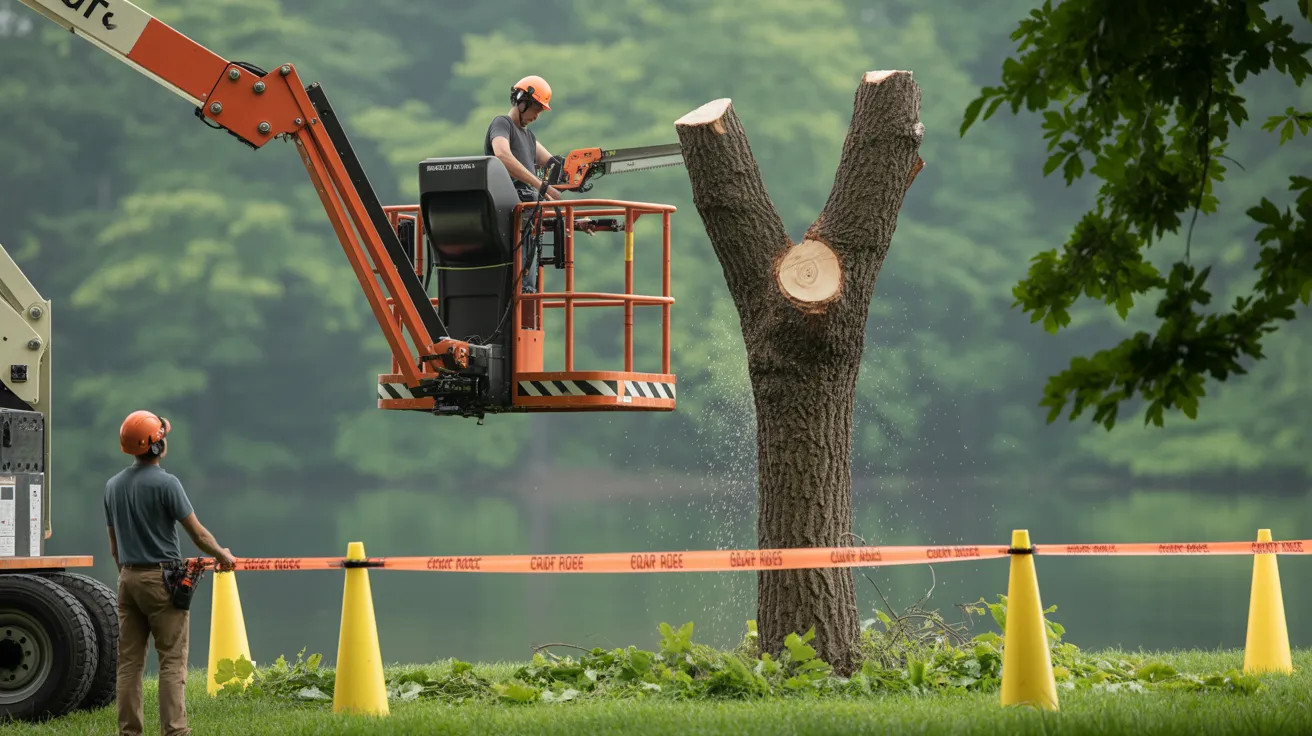
Rely on Parkhill Tree Service to deploy top-tier arborist equipment optimized for safety and accuracy. You benefit from high reach aerial lifts with safety-rated booms, non-marking outriggers, and capacity tracking to prevent overcapacity events. Crews use GPS guided fleet tracking to stage equipment effectively and minimize idle time on-site. Chain saws include inertia-activated chain brakes and low-kickback bars, while lifting equipment includes traceable ratings that align with calculated forces. Equipment is serviced to OEM specs; chipper performance is verified through cutting system inspection, system calibration, and power system verification. Stump grinders operate with guarding and emergency stops validated per CSA standards. Parkhill maintains active liability and WSIB coverage, and documents pre-job inspections, maintenance intervals, and calibration reports to ensure safety standards and safeguard your property.
Rigorous Safety Protocols
Consistently, Parkhill Tree Service implements a documented safety program that combines technical safeguards, validated tools, and validated liability coverage. You gain through a mature safety culture that standardizes safety evaluations, operational planning sessions, and task allocations. Crews deploy safety gear aligned with job-related hazards, maintain lockout tagout for energized tools and chippers, and install worksite signage to manage public and traffic interfaces. Supervisors oversee safety incident records and near miss tracking to drive remedial steps and quantifiable safety improvements. You'll notice verified instruments, standard-meeting equipment, and chain-of-custody inspections recorded before mobilization. Field teams follow provincial and ANSI/ISA standards, with ongoing education on fall protection, elevated emergency response, and electrical hazard awareness. Documentation is audit-ready, chronologically tracked, and validated at each phase.
Comprehensive Liability Protection
Despite varying risk levels across different projects, Parkhill Tree Service backs each job with comprehensive liability insurance that corresponds to their systematic safety measures and certified equipment. Clients obtain protection that covers actual field hazards-including rigging loads, aerial lift operations, chipper exposure, and traffic control interfaces. We specify precise policy limits for structural damage, personal injury, and finished work, matching safety evaluations completed before project mobilization.
Our protection supplements CSA-compliant PPE, periodic safety checks, and operational permits, addressing areas that self-insurance cannot address. We'll issue certificates of insurance as required, detailing endorsements, additional insured status, and waiver of subrogation as needed. In the event of an occurrence, our streamlined claims process documents accountability sequence, timestamps, and event factors, accelerating resolution while maintaining your project schedule and budget predictability.
Upfront Pricing, Booking, and Maintenance Programs
Since transparent details eliminate uncertainty, Parkhill Tree Service delivers detailed, itemized estimates that specify scope, methods, equipment, disposal, traffic control, and permit requirements before any work begins. You get detailed price information linked with specific parameters-DBH, canopy spread, access constraints, and utility proximity-so you can compare options and understand cost drivers. We specify ANSI A300 practices, PPE, and exclusion zones in your project documentation.
You'll receive a scheduled service window, advance service alerts, and backup arrangements for weather-related issues or utility interruptions. Crews arrive with precision-tested tools and finished safety protocols. After completion, you get a service summary with documentation and suggestions. To ensure tree vitality and lower the risk of issues, we provide ongoing maintenance plans with scheduled assessments, periodic pruning, pest monitoring, soil care, and financial projections.
Questions & Answers
Are There Green Disposal and Wood Recycling Solutions for Tree Removals?
Absolutely, you can environmentally conscious disposal and wood repurposing solutions. We sort timber, limbs, and wood chips for reuse: creating lumber, generating mulch, or providing biomass material. When possible, we position specific logs or brush collections for natural habitat development, complying with city guidelines and invasive plant protocols. We sanitize our tools to avoid spreading pathogens and provide chain-of-custody documentation. You'll get detailed disposal strategies, weight records, and safety protocols aligned with industry standards and best practices.
May I Keep the Wood Chips or Logs for My Personal Use?
Yes, absolutely, you can store wood chips and logs. The impact is significant in the long run. Use chips in your garden beds; they control soil temperature, inhibit weeds, and retain moisture. Let chips break down 3-6 months to avoid nitrogen drawdown. For logs, follow safe firewood storage: split them for faster seasoning, raise above ground, shield only the top, confirm 15-20% moisture (use a meter), and position woodpiles 6-10 feet from structures to lower pest and fire risk.
What Seasonal Discounts and Referral Programs Do You Provide?
Yes. You'll typically find seasonal special offers during low-demand periods (between seasons) for tree care and removal services. Make sure to get written details, eligible services, and restricted periods to make sure safety-critical tasks are done properly. Many providers also offer rewards for referrals-usually a percentage off or set dollar amount-after the referred customer's service is completed and paid. Confirm limits per household, combination with other discounts, and expiration dates. Document quotes and discounts on the final invoice.
Do You Offer Support for Municipal Permits and Bylaw Compliance Paperwork?
We provide full bylaw and permit support from initial contact until completion. Our team manages assessing relevant local regulations, handling paperwork, arranging arborist reports, and filing permit requests. We arrange required site visits, utility locates, and traffic control measures where necessary. You'll receive comprehensive risk assessments, site maps, and service documentation conforming to ISA and ANSI A300 standards. We manage all approvals, maintain detailed records, and coordinate services upon permit approval to guarantee regulatory compliance and safety.
What Guarantees or Warranties Come With Your Services?
You receive a detailed service guarantee and a specific workmanship warranty on all completed tasks. We specify coverage terms in writing, including timeframes, limitations, and remedial steps. When problems occur from our workmanship within the warranty period, we quickly respond, inspect issues, and fix to requirements at no cost. We provide post-service documentation, photos, and compliance notes to validate completion. Report issues within stated timelines so we can investigate, reduce hazards, and process warranty claims promptly.
Concluding Remarks
You might risk it with amateur tree work and uncertainty, or you could rely on Parkhill's certified arborists and let professional standards tackle the challenging tasks. You'll get thorough risk assessments, industry-compliant pruning, accurate stump grinding, and protected removals that don't result in property damage. When severe weather strikes, you can expect rapid assistance, documented procedures, and verified soil remediation. Simply put, you're investing in more than tree services - you're investing in safety, compliance, and reliable outcomes.